
Daily Restaurant Cleaning
Daily service suits busy dining rooms where restroom traffic produces frequent waste, fingerprints, floor soil, and supply use. The scope can include each operating day or selected high-volume days.
Serving Salt Lake City, Utah & surrounding areas
Open 24/7

Keep guest and employee restrooms clean, stocked, and ready for service with a schedule built around your operating hours.
Restaurant Restroom Cleaning requires more than a quick wipe of the sinks. High-touch surfaces, toilet fixtures, floors, dispensers, partitions, mirrors, and waste bins all need consistent attention. Odors and visible soil can return quickly during a busy shift, so the cleaning plan must match the restaurant's traffic and hours.
Salt Lake City restaurants face different service patterns depending on location. Downtown dining rooms may need cleaning after late events at the Salt Palace Convention Center or Delta Center. Sugar House restaurants often balance dinner traffic with nearby shopping and neighborhood activity, while Central Ninth businesses can have compact restrooms that require an efficient, carefully organized routine. The schedule should reflect those conditions instead of applying the same checklist to every property.
Salt Lake City Restaurant Cleaning provides daily, nightly, and recurring service based on the facility's actual needs. Our team of Salt Lake City's restaurant specialists coordinates restroom work around closing procedures, access requirements, and the time staff need to prepare for the next service period.

A thorough visit starts with fixture cleaning and disinfection. Toilets and urinals are cleaned inside and out, including seats, flush handles, bases, and nearby surfaces. Sinks, faucets, counters, mirrors, partitions, door hardware, and accessible grab bars receive attention according to the written scope. Cleaners use the product's label directions, including its required dwell time, because a disinfectant must remain visibly wet for the stated period to work as directed.
Floors are swept or vacuumed before damp mopping so loose debris does not turn into residue. Corners, edges, and the areas around toilet bases need special attention. Waste and sanitary receptacles are emptied, liners are replaced, and dispensers can be restocked with client-supplied paper goods, soap, and other consumables when included in the agreement.
Cleaning and disinfecting are separate steps. Soil is removed first because residue can interfere with a disinfectant's contact with the surface. Color-coded cloths and tools also help prevent restroom equipment from being used in dining or food-preparation areas.
Daily service suits busy dining rooms where restroom traffic produces frequent waste, fingerprints, floor soil, and supply use. The scope can include each operating day or selected high-volume days.
Overnight restaurant cleaning allows fixtures and floors to be handled after guests leave. It also gives disinfectants their required contact time without cleaners working around customers.
Night service can begin after closing or during an agreed access window. Entry instructions, alarm procedures, key control, and completion expectations should be settled before recurring work starts.
A recurring plan keeps the same core tasks on a dependable schedule. Periodic detail work can address partitions, wall spots, grout lines, vents, and buildup that falls outside routine visits.
Soap, tissue, paper towels, liners, and sanitary supplies can be checked during each visit. Responsibilities for purchasing and storing stock are documented so restaurant staff know what the cleaning crew will replenish.
A written checklist identifies the restrooms, visit frequency, routine tasks, periodic work, access window, and supply responsibilities. This gives managers a practical standard for reviewing completed work.
We review the number and layout of restrooms, fixture types, floor materials, current condition, storage access, and traffic patterns. Existing concerns such as persistent odor, mineral residue, grout buildup, or damaged dispensers are documented.
The service plan identifies routine and periodic tasks, cleaning frequency, products, consumables, and the preferred access window. For nightly restaurant cleaning in Salt Lake City, the schedule can account for late closings and building security procedures.
The crew posts appropriate caution signage, removes waste, cleans higher surfaces, handles fixtures and touchpoints, restocks agreed supplies, and finishes with the floor. Tools assigned to restrooms remain separate from tools used in other restaurant areas.
Managers can report supply issues, missed details, or changes in operating hours. The checklist and frequency can then be adjusted when seasonal traffic, events, or a new service schedule changes restroom use.
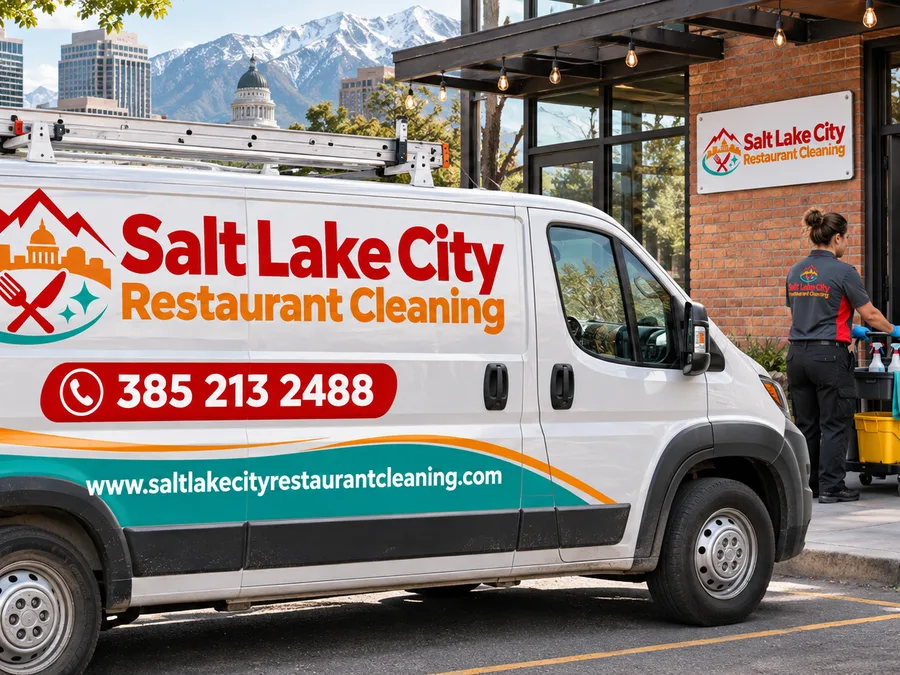
The right frequency depends on guest count, hours, restroom size, and whether employees use the same facilities. A small reservation-based dining room may need a different routine than a quick-service restaurant with steady customer turnover. Downtown properties near major event venues may also benefit from added service around unusually busy nights.
Salt Lake City's winter weather can bring tracked-in moisture, grit, and deicing residue. Restroom entrance areas and floors may need more frequent attention during snowy or wet conditions, especially where guests move directly from an exterior entrance into the dining room. Slip-resistant floor care matters: cleaners should use products compatible with the flooring, control solution levels, and leave the surface dry before service resumes.
Summer dust can collect along baseboards, vents, and corners, while frequent handwashing can leave soap residue and water spots around sinks. A restaurant janitorial company should separate these recurring conditions from maintenance problems. Cleaning can remove soil and odor sources, but it cannot repair a leaking toilet, failed exhaust fan, broken seal, or damaged grout.
A useful proposal should identify exactly what is cleaned during every visit and what is handled periodically. Ask whether floors, partitions, dispensers, touchpoints, waste receptacles, and accessible fixtures are named in the scope. Confirm who supplies chemicals and consumables, how access is managed, and how the company records service concerns.
Product choice should fit the surface and task. An EPA-registered disinfectant must be used according to its label, and mixing chemicals is unsafe. Natural stone, stainless steel, grout, resilient flooring, and coated fixtures may require different products. The contractor should also have a process for wet-floor signs, personal protective equipment, ventilation, and storage of chemicals away from food and guest areas.
Reliable restaurant janitorial services in Salt Lake City should work within operating constraints rather than asking the restaurant to adapt to a generic route. Clear communication is especially important for properties with shared loading access, secured buildings, or late-night closing procedures. Salt Lake City Restaurant Cleaning develops the scope around the facility, then provides a repeatable checklist that managers can review.
Recurring restaurant restroom cleaning in Salt Lake City typically costs about $150 to $600 per month for a small facility, while larger or high-traffic properties with nightly service may run $600 to $1,500 or more per month. One-time deep cleaning is often priced separately. Final cost depends on restroom count, fixture count, condition, frequency, access hours, floor material, consumable restocking, and whether the work is bundled with broader janitorial cleaning. The exact price is confirmed after a facility walkthrough and written scope.
Get a cleaning schedule and written restroom scope that match your operating hours, traffic, and supply responsibilities.
Call for a Free QuoteThe professional cleaning schedule should match traffic, operating hours, and the restaurant's in-shift inspection routine. Busy locations may need nightly service plus checks by restaurant staff during operating hours, while lower-volume dining rooms may use selected recurring service days. Downtown Salt Lake City restaurants should consider added attention when conventions, concerts, or arena events are likely to increase guest counts.
Yes, overnight work can be arranged within an agreed access window after guests and closing staff have cleared the work area. The plan should document alarm procedures, keys or access credentials, locked interior areas, and the required completion time. This is particularly useful for Salt Lake City restaurants whose dinner service runs later during events.
Restocking can be included, but the agreement should state who purchases and stores each consumable. Common items include toilet tissue, paper towels, hand soap, liners, and sanitary disposal supplies. During the walkthrough, the cleaner should confirm dispenser types and storage locations so incompatible refills are not ordered or installed.
Recurring cleaning can remove many odor sources, including residue around toilet bases, soiled grout, waste, and dirty floor edges. Persistent sewer-like or damp odors may indicate a dry floor drain trap, plumbing leak, failed seal, or ventilation problem that requires building maintenance or a qualified trade. The cleaning crew should report those conditions rather than masking them with fragrance.
A routine visit may take roughly 20 to 45 minutes per restroom, but the actual time depends on fixture count, floor area, current condition, supply restocking, and disinfectant dwell times. Initial or periodic detail cleaning takes longer. A walkthrough allows the restaurant janitorial company to set a realistic access window without rushing required tasks.
Additional service may be scheduled when crew availability and building access allow. Restaurants near the Salt Palace Convention Center and Delta Center may want to plan extra visits before or after dates expected to bring heavier traffic. Advance notice provides more scheduling flexibility and allows consumable stock to be checked before the event.
The proposal should list each restroom, service frequency, routine tasks, periodic detail work, access times, products, floor-care method, consumable responsibilities, and the process for reporting issues. It should also distinguish cleaning duties from plumbing, fixture repair, pest control, and other maintenance work. That written scope makes competing proposals easier to compare.
Tell Salt Lake City Restaurant Cleaning about your restrooms, operating hours, current concerns, and preferred frequency. We will outline a practical scope for daily, nightly, overnight, or recurring service.