
Cooking Line Equipment
Accessible surfaces on ranges, ovens, griddles, fryers, charbroilers, and hot holding equipment are degreased with methods suited to the finish and soil level.
Serving Salt Lake City, Utah & surrounding areas
Open 24/7

Detailed cleaning for commercial cooking equipment, prep areas, and hard-to-reach surfaces, scheduled around service so your kitchen can stay ready for the next shift.
Restaurant Equipment Cleaning Taylorsville removes the grease, carbon, food residue, and soil that routine shift cleaning often cannot reach. Salt Lake City Restaurant Cleaning develops the scope around your equipment, kitchen layout, operating hours, and areas of concern. The goal is a practical cleaning plan that supports sanitation, equipment care, and consistent daily operations.
Our restaurant experts throughout Salt Lake City, UT work methodically around fixed cooking lines, movable equipment, prep stations, and storage areas. Before work begins, we confirm which units are included, which components can be removed safely, and whether manufacturer instructions impose cleaning restrictions. Restaurants near the commercial corridors along Redwood Road may need late-night or off-day scheduling, while neighborhood operations near Valley Regional Park may prefer shorter recurring visits that fit a smaller kitchen and service schedule.
Cleaning does not replace maintenance, repair, fire-suppression service, or a certified hood inspection. If a technician finds a damaged cord, loose fitting, failing seal, active leak, or unsafe component, the affected unit should remain out of service until a qualified equipment professional evaluates it.

A commercial equipment scope may include ranges, ovens, flat-top griddles, fryers, charbroilers, steam tables, hot holding units, prep tables, shelving, reach-in refrigeration exteriors, and accessible surfaces beneath or behind movable units. Removable racks, trays, grease pans, knobs, guards, and filters may be cleaned when their construction and manufacturer instructions allow it.
Each surface needs the right method. Stainless steel is cleaned with the grain to reduce visible scratching. Carbonized deposits may require dwell time and careful agitation rather than aggressive scraping. Food-contact surfaces need compatible products followed by the rinsing and sanitizing steps specified on the product label. Electrical controls, pilot assemblies, burner ports, insulation, and sensitive connections are protected from excess moisture.
Equipment cleaning is narrower than complete restaurant cleaning. Dining rooms, restrooms, floors, and broad front-of-house work can be included only when they are written into the agreed scope. That distinction keeps expectations clear and gives managers a usable checklist for every visit.
Accessible surfaces on ranges, ovens, griddles, fryers, charbroilers, and hot holding equipment are degreased with methods suited to the finish and soil level.
Racks, trays, grease pans, guards, and approved filters can be removed, cleaned, dried, and returned to their proper positions.
Stainless prep tables, shelving, carts, and other durable surfaces receive close attention at seams, legs, undersides, and contact points.
When equipment can be moved safely and utility connections permit it, crews clean accumulated residue in concealed floor and wall areas.
Doors, handles, gaskets, tops, sides, and accessible exterior surfaces can be cleaned without flooding controls or mechanical components.
A rotating schedule can divide deep-cleaning tasks across visits, helping busy kitchens manage buildup without closing the entire cook line at once.
We identify the equipment, removable parts, access limits, soil conditions, and operating window. Managers can also flag problem areas such as carbonized griddles, greasy casters, or residue behind the cook line.
The kitchen team shuts down and cools equipment as required. Our crew protects adjacent surfaces, separates approved removable parts, and checks that equipment can be accessed without disturbing unsafe utility connections.
Compatible products are applied with the required dwell time. Technicians use pads, brushes, scrapers, and controlled moisture based on the surface, taking care around labels, controls, seals, and burner components.
Where required, cleaned surfaces are rinsed and food-contact areas are sanitized according to product directions. Components are dried before reassembly to avoid leaving moisture in concealed spaces.
We check the written scope with the manager, note inaccessible or damaged areas, and discuss a practical interval for recurring service based on cooking volume and grease accumulation.
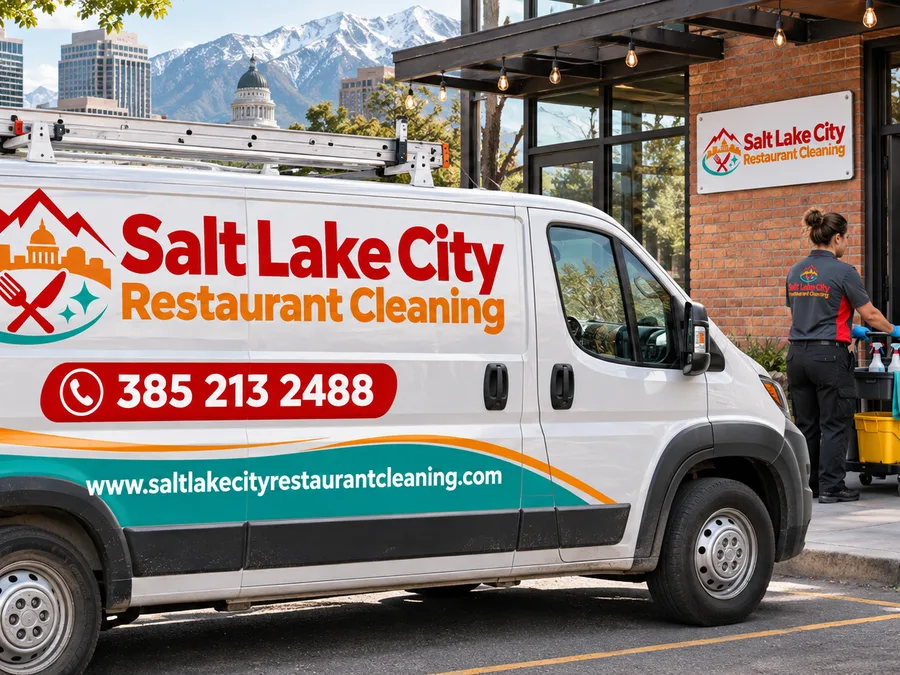
Commercial kitchens cannot always stop for cleaning during normal business hours. A breakfast operation may need work after an early close, while a dinner restaurant may require overnight access. Multi-tenant properties also introduce loading, parking, noise, and building-access rules that must be settled before the crew arrives.
Northern Utah winters can bring snow, slush, and deicing residue into receiving areas and kitchen traffic paths. That soil can spread around equipment legs and casters, so access routes and floor edges may need extra attention during cold-weather visits. Dry summers can add dust near doors, vents, and equipment tops. These conditions affect the scope, but they do not justify using harsh products on sensitive finishes.
We coordinate arrival instructions, shutdown responsibilities, water access, and opening deadlines before service. A manager should also identify equipment that cannot be moved, units under warranty, and surfaces that require manufacturer-approved products. Clear planning reduces disruption and gives the crew enough time to complete detailed work safely.
Effective restaurant cleaning depends on more than appearance. Grease and food residue collect at seams, hinges, handles, fasteners, casters, and the narrow gaps between units. Those areas require deliberate agitation and enough contact time for the cleaning product to work. Applying more chemical is not a substitute for using the correct product and method.
Cleaners and sanitizers should be used according to their labels, including dilution, required contact time, rinsing instructions, ventilation, and personal protective equipment. Chemicals must never be mixed unless the manufacturer explicitly permits it. Food, utensils, single-use items, and exposed ingredients should be removed or protected before work starts.
The work also needs firm boundaries. Cleaning staff should not disconnect gas lines, open energized electrical compartments, adjust fire-suppression components, or perform mechanical repairs. Exhaust ducts and suppression systems require appropriately qualified providers. A written scope makes these limits clear while identifying the equipment surfaces that the cleaning crew can address safely.
Arrange the work around your shutdown window and receive a clear equipment list, access plan, and cleaning scope before the scheduled visit.
Call for a Free QuotePricing depends on the number and type of units, grease and carbon buildup, access, removable components, and the time available for work. A few prep or cooking units cost less than a full cook-line detail. Fixed equipment, heavy buildup, and overnight scheduling can add labor. An equipment list and inspection are the best basis for a written price.
Yes, after-hours scheduling is often available when access, shutdown, and reopening times are confirmed in advance. Taylorsville restaurants with late dinner service should allow enough time for hot equipment to cool before cleaning and for components to dry before startup.
A limited group of accessible units may take several hours, while a heavily soiled cook line can require a longer shift or phased visits. The duration depends on cooling time, carbon buildup, equipment mobility, removable parts, and the required opening deadline.
Yes, cooking equipment generally needs to be turned off and cooled to a safe working temperature before detailed cleaning begins. Restaurant staff should follow the manufacturer's shutdown procedure, remove food, and identify any unit that must remain operational.
Equipment is moved only when it can be handled safely without straining or disconnecting utility lines. Units with rigid gas, electrical, water, drain, or fire-suppression connections may need to remain in place, and the crew will clean only the accessible surfaces around them.
No, ordinary equipment cleaning should not be treated as certified exhaust-system or fire-suppression service. Accessible exterior hood surfaces and approved removable filters may be included in a written scope, but ducts, fans, and suppression components require the proper specialist.
The interval should be based on cooking volume, menu, grease production, manufacturer guidance, and the results of routine inspections. Frying and charbroiling commonly create faster buildup than light prep. Many managers use recurring visits with rotating detail tasks rather than waiting for the entire line to become heavily soiled.
Share your equipment list, operating hours, and problem areas with Salt Lake City Restaurant Cleaning. We will help define the scope and schedule the work around your restaurant's needs.